
Mud-rich coastline made 2011 Japan tsunami far more destructive, study finds
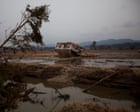
Analysis of video footage reveals how wave changed as it travelled over mud-rich rice paddies, exerting more force
It is just over 15 years since the devastating Tohoku earthquake and tsunami struck Japan, killing almost 20,000 people and triggering the Fukushima Daiichi nuclear disaster. Fresh analysis of video footage of the wave has revealed that the mud-rich coastline made the tsunami far more destructive than it might otherwise have been.
Patrick Sharrocks, from the University of Leeds, and colleagues studied helicopter video footage, along with before and after images from Google Earth, to estimate the speed, shape and power of the tsunami flow front. They found that as the wave travelled over mud-rich rice paddies it changed from a fast-moving, clear-water flow into a thick, gloopy, mud-laden one.