
Tadej Pogačar is expected to ride to victory on the Champs-Élysées in Paris when the Tour de France ends Sunday. While his commanding performance has left little doubt about the outcome, the journey to the finale has been remarkable for another reason: climate change.
The grueling 23-day trek through France has seen a barrage of emissions-driven extremes, from wildfires to blistering heat. It was so dry at one point that organizers banned TV crews from a French pastime, smoking. Pogačar even suggested that the race, which has almost always spanned late June and early July, no longer occur during the summer.
“If I had the power,” he said, “I would change all the calendar and not race in July and August in hot places.”
The trouble started earlier this month when wildfires threatened the Pyrénées-Orientales region during the third stage, as each day’s race is called. Organizers considered cancelling it, but decided it would continue. Still, they limited the caravan that typically follows it to essential vehicles. They also asked fans, a fixture along every route, to stay away from the last 27 miles of the day’s 121-mile race.
“We invite the public not to come to the edge of the race or to the finish site,” race director Christian Prudhomme told France TV. “With exceptional fires, exceptional measures on the Tour, the first thing is the protection of the people.”
The more persistent problem has been a record-breaking European heatwave. According to ProCyclingStats.com, the first two weeks of the Tour brought the highest average temperature of the past two decades: 90 degrees Fahrenheit, compared to 79 degrees in 2022.
“I’ve never seen weather conditions this hot every single day,” said XDS-Astana Team sports director Yvon Ledanois. “It isn’t a case of having one extremely hot day and then returning to normal conditions the next.”
Enduring such heat for one race would be rough, but each of the 21 stages is effectively a race of its own. Competitors ride an average of about 100 miles daily for the better part of three weeks, and it isn’t unusual to see them maintain speeds around 30 mph for hours at a time. Much of the Tour crosses the Alps and Pyrenees, with treacherous climbs. Through it all, riders get just two days of rest.
Ann-Christine Poujoulat / AFP
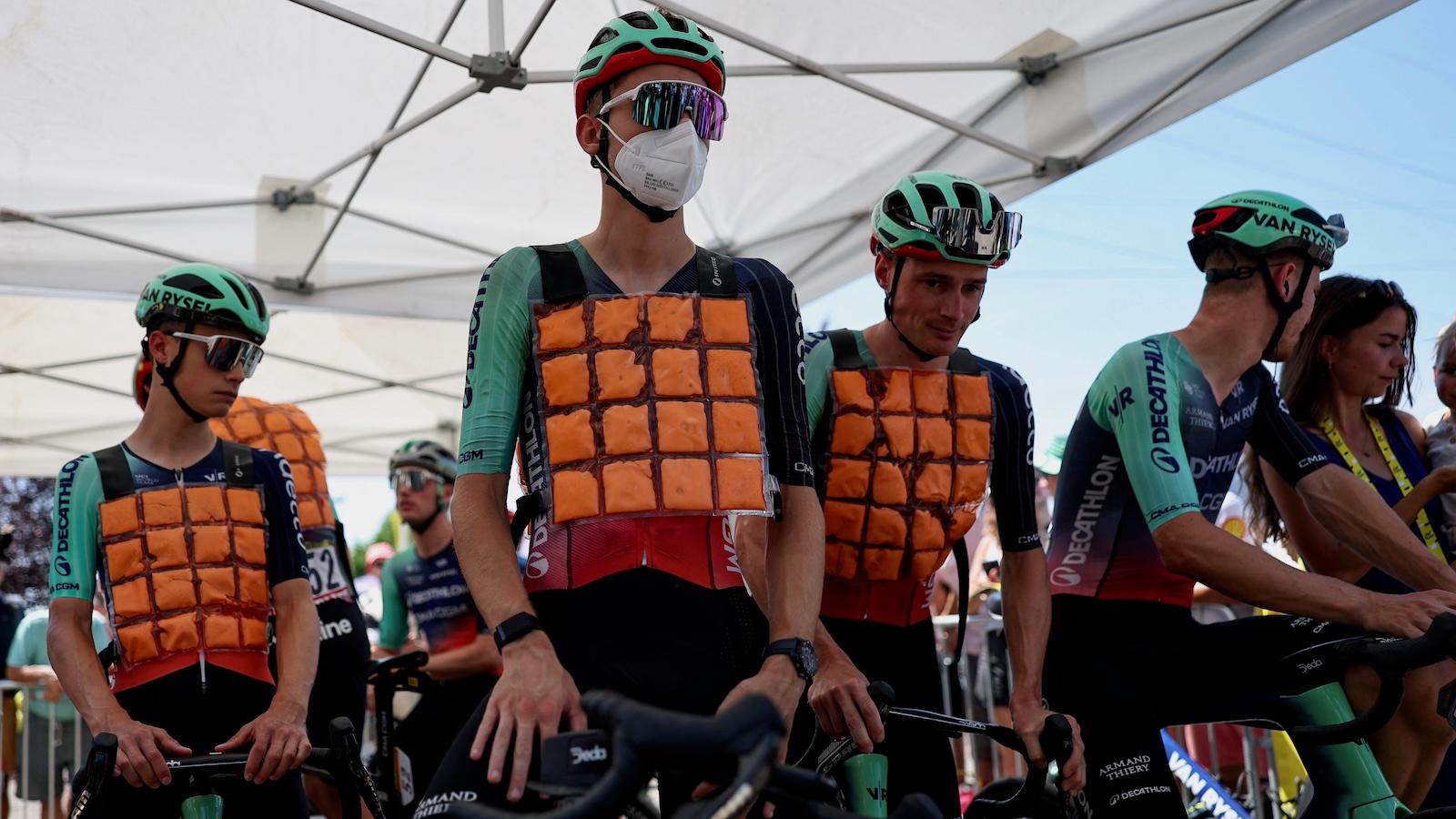
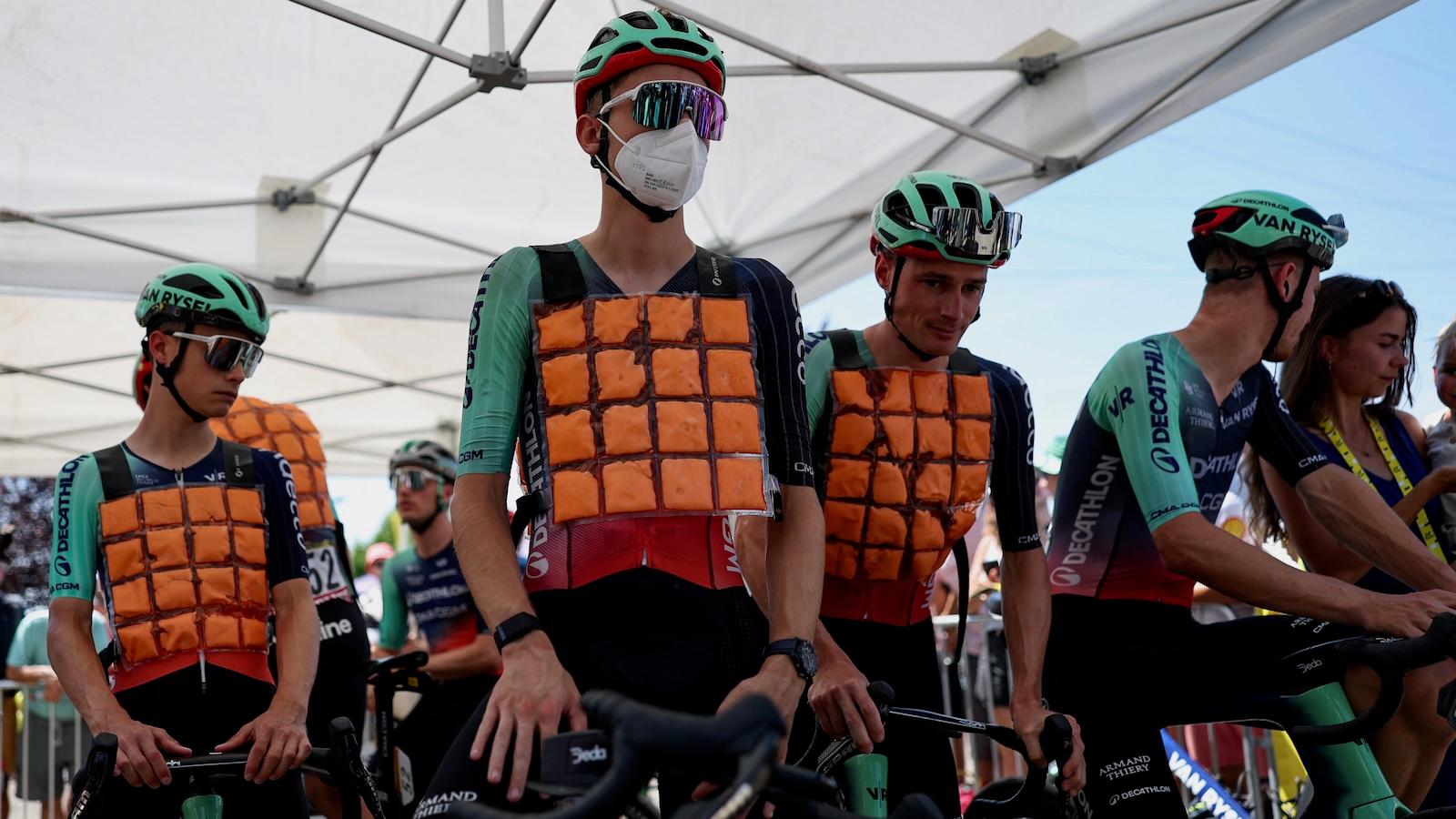
That kind of prolonged exertion during extreme heat can be dangerous, even for athletes with the specialized training required to complete the Tour. Pogačar reported having a “full headache” at the start of Stage 4 as temperatures topped 100 degrees. Officials relaxed their rules around food and hydration, and one team said each of its riders was drinking around 28 bottles of water every day, which is several times the norm. Many also wore “ice vests” before the start of each day’s ride, and “ice socks” during it. Things got so bad that race organizers shortened one leg for the first time in Tour history when they cut 30 kilometers (18.6 miles) from Stage 9. The government told regional officials they could cancel them entirely in the event of a red heatwave alert.
Even when the sun went down, the respite was minimal. Temperatures didn’t ease much, and many European hotels do not have air conditioning. “When we have these high nighttime temperatures, the body isn’t able to recover sufficiently,” Kurt Shickman, who works on heat issues at the World Resources Institute, told Grist when asked about early July’s heatwave. “They’re going into the next hot day with a couple strikes against you from a health perspective.”
Recent research has shown these hazards are growing more frequent and intense. “My co-authors and I have been following the heat during this Tour with horror,” Ivana Cvijanovic, a climate scientist at the French National Research Institute for Sustainable Development and the paper’s lead author, told TIME. “This summer is clearly extreme — there was simply no opportunity to be lucky as France and Spain have been under heat wave warnings for weeks.”
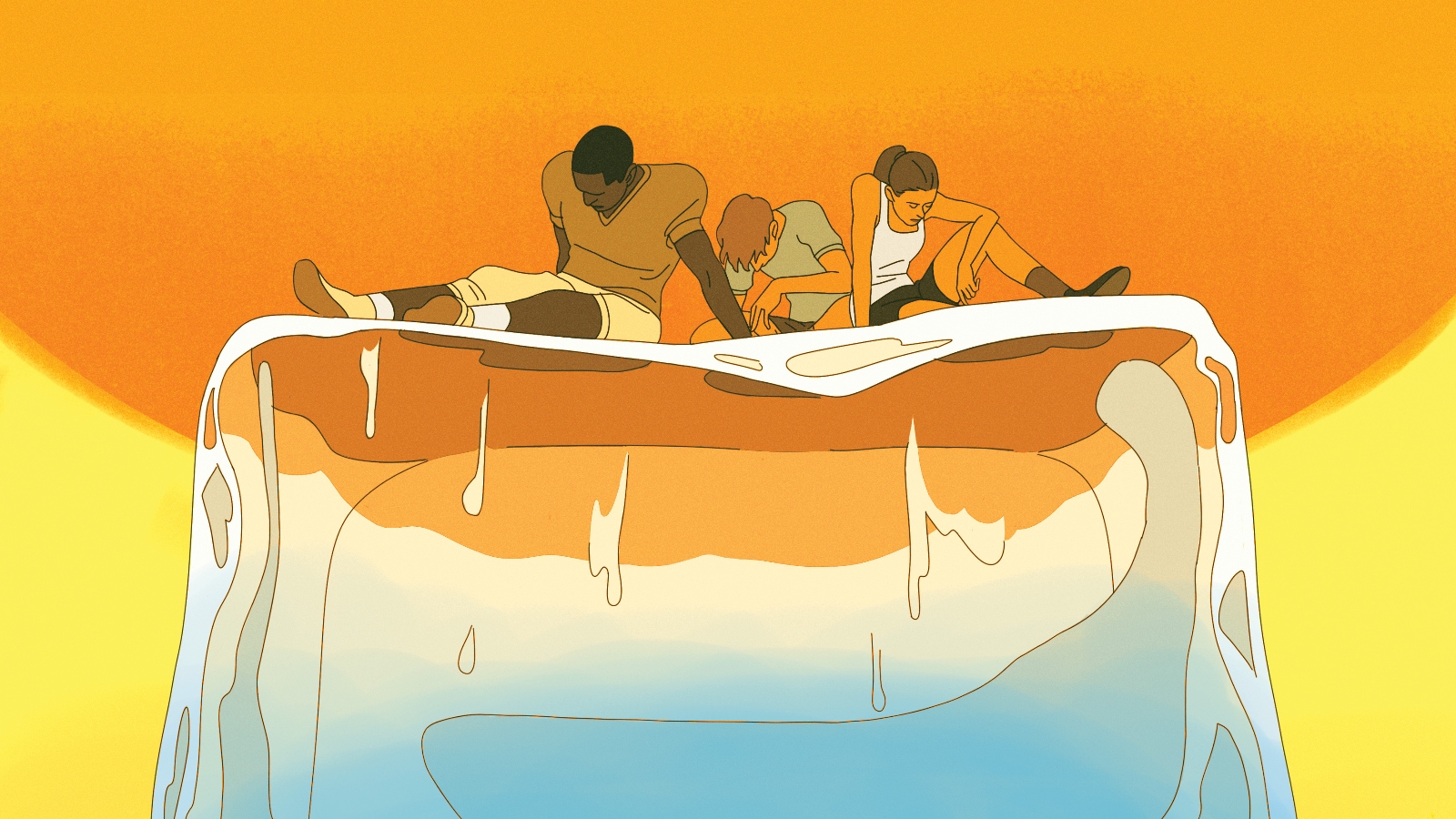
The brutal conditions have sparked a discussion about the Tour’s support from fossil fuel companies. French oil giant TotalEnergies sponsors a team and has signed a three-year deal to underwrite the race. Australian energy company Santos has long backed the Tour Down Under. While their funding helps finance riders and events, these companies are driving climate change, which threatens the viability of cycling and other sports, including the World Cup — where Saudi oil giant Aramco was a major advertiser.
“It’s almost impossible to avoid becoming a billboard for them,” one anonymous rider told Cycling Weekly. “I’d go further and say that, concerning the climate crisis, and professional cycling’s addiction to sponsorship from oil companies, airlines, and car manufacturers, there is a rule of silence, as deeply rooted in cycling culture as the old omertà about doping.”
Whether and how the Tour adjusts to climate change remains to be seen. Pogačar’s suggestion that the race be held at a different time of year would upset the traditional order of the sport’s three grand tours. A number of other solutions have been proposed, including altering start times. But even small changes can be a big problem given the complex logistics and broadcast schedules involved.
In the meantime, the Tour is racing toward its inevitably sweaty conclusion.
This story was originally published by Grist with the headline The year climate change came for the Tour de France on Jul 23, 2026.